


Edelman Unveils Landmark Arab Youth Outlook 2026 A Generation Balancing Pressure and Potential
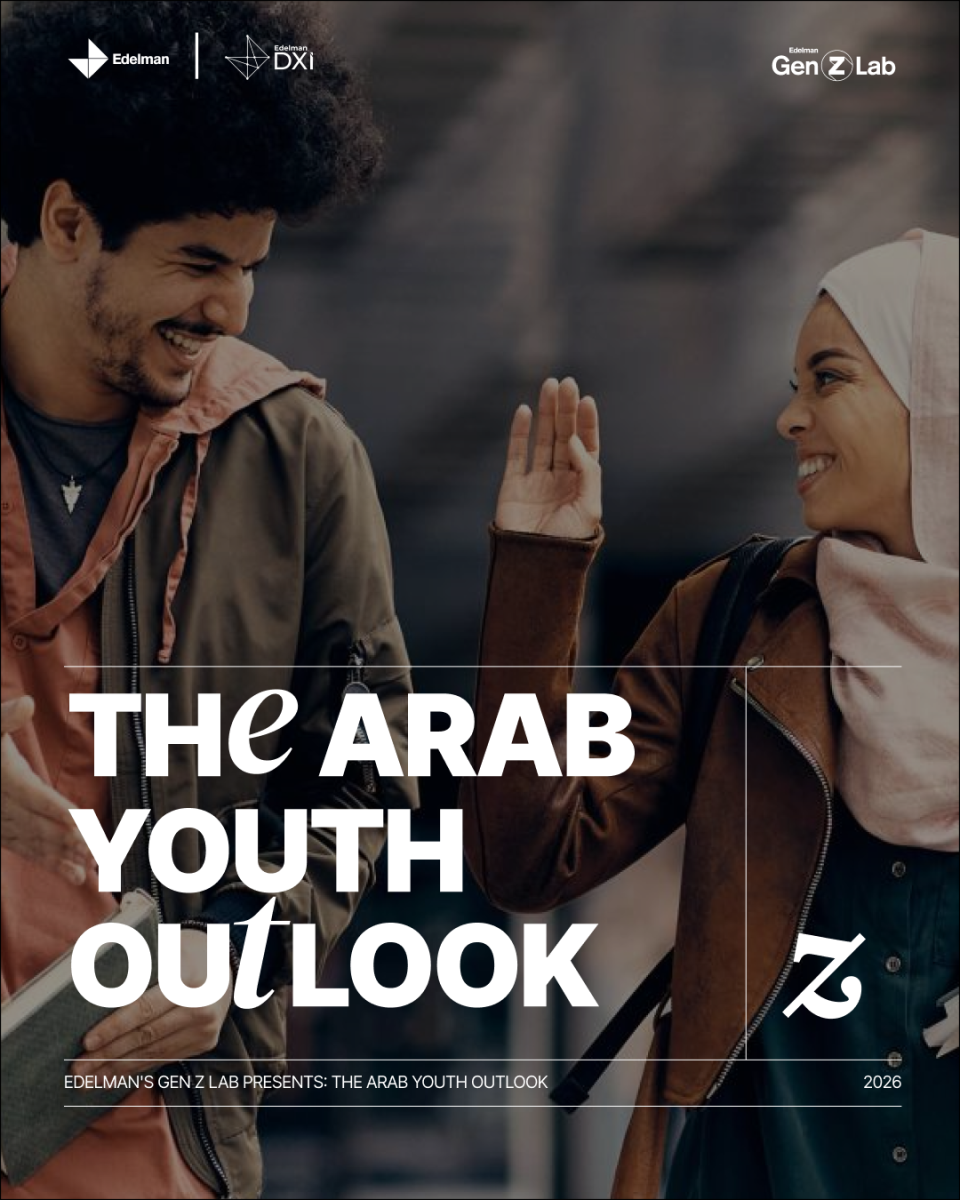
Abu Dhabi, UAE, 11 February 2026– Edelman today announced the launch of the Arab Youth Outlook 2026. This report offers a comprehensive look at the mindset of young people aged 18–30 across the Arab world, revealing a generation defined by resilience, drive and an unshaken belief in their ability to shape a better future.
This is the first dedicated piece of research from Edelman’s newly formed Gen Z Lab in the Middle East built through a collaboration between Edelman and Edelman Data & Intelligence (DXI). The study surveyed more than 4,000 young people across 10 Arab countries, representing roughly 70% of the Arab world’s population and 85% of its combined GDP. It highlights a generation that is learning, adapting and moving forward with confidence, even as they navigate shifting social norms, rapid technological change, geopolitical uncertainty and broader economic pressures.
In a World of Pressure, Technology Gives Arab Youth Agency
The findings underline the structural pressures shaping the day-to-day reality of young people across the region. Health and wellbeing, financial situation and job security are their top concerns. Yet Arab youth feel most in control where they can act, through learning, adapting and defining who they are. Technology stands out as a major source of empowerment, with nearly two-thirds (68%) saying they feel equipped to adapt to emerging technology, and many seeing it as a catalyst for learning, growth, and wellbeing. While health ranks as their second main concern, 62% say they find it easy to take care of themselves. Alongside this, optimism remains strikingly high. Three in four (75%) Arab youth say they are optimistic about their future, and 83% want to be included in the decisions that shape it – signalling a generation whose confidence is matched by a desire for participation.
Institutional Support Makes the Difference
Institutional support emerges as a critical factor shaping that optimism. Young people are clear about what they need most from institutions, which includes job opportunities, financial stability and support for their mental and physical wellbeing. More than three quarters (83%) say it is difficult for young people to plan for the future without stability, underscoring the importance of long-term frameworks that enable progress. Crucially, optimism rises sharply among youth who feel institutions are supportive and understand their needs.
Optimism Persists, Despite Mounting Economic and Social Pressures
The research also shows that optimism exists alongside very real economic and social pressures. While only around half of Arab youth say they find it easy to cover daily living expenses (54%) and feel prepared to face a major financial challenge (55%), confidence is far from universal. This reveals a divide beneath the surface, where financial security feels uneven across the generation. Social pressures persist as well, with eight in ten (81%) saying they have felt excluded or judged at least once, and 77% saying they hide parts of themselves to avoid judgement. Nidaa Lone, Head of Abu Dhabi, Edelman Middle East, said: "This research shows a generation that is not waiting for the future to happen to them, they are actively shaping it. Arab youth are both determined and optimistic, but they are also clear about the support they need to turn that optimism into progress. This is a pivotal moment for institutions to step forward as partners, not just observers, and work with young people in the ways they desire to build the conditions for long-term stability and opportunity." The full Arab Youth Outlook 2026 report explores these findings in greater depth, offering organisations a clearer understanding of the priorities, pressures and potential of Arab youth, and the opportunities to better support their future. This report coincides with the official launch of Edelman's Gen Z Lab in the Middle East, a dedicated regional platform helping brands, governments, and institutions understand and engage the next generation through data-driven insights and culturally grounded strategies. Through advisory services, focus groups, idea vetting, creative campaign development and more, the Gen Z Lab in the Middle East is part of Edelman’s broader, 500+ Gen Z cohort around the world.
Contributed by